Over the last three weeks we were lucky enough to host Eleonora Secchi (ETH Zürich). Her visit was supported by a Visiting Fellowship from UIB (calls every 6 months: drop an email if interested!). We had lots of fun working on biofilm streamers by marine bacteria and in general exchanging ideas and learning from each other. Have a good fly back Eleonora and talk soon!
Yeast mating: here we go!
I am absolutely delighted to share the news that, together with Irene Stefanini (U. Torino), Daniel Segrè (Boston Uni) and Elizabeth New (U. Sydney), we have been awarded a grant from the Human Frontiers Science Program to work on the biophysics of yeast mating. This is a very intriguing subject involving mechanical stresses, metabolism, mixing flows and…. (surprisingly) the gut of wasps! In our group, this grant will finance a postdoctoral position and a lab technician with a starting date of 1st of Nov. (Ads coming out soon)
To sink or Not to sink

Micoorganisms are usually denser than the medium they live in, and therefore have the tendency to sediment. When they’re motile, this might not look like a big problem, but when they are not… well… they need to find a way to stay afloat. How do they do it? We are lucky to have been involved in a very interesting project led by Joseph Christie-Oleza on the sinking behaviour of cyanobacteria. It turns out that pili help cyanos stay afloat! And, surprisingly, help fend off grazers as well. The results have just been published in Nature Communications. Congrats to all and in particular to Joseph!
Swarming, Traffic Jams and Biofilms

Absolutely delighted that Iago’s paper on the transition from bacterial swarming to biofilms is now out on eLife.
When the expansion of a B. subtilis swarm is hindered (even just by a simple barrier!) cells at the front pile up through a physical process similar to a traffic jam (a transient one in the movie!). This in turn leads to the emergence of a localised biofilm. This is the first direct report we could find of a transition between swarming and biofilm! Great work by Iago and fab collaboration with Munehiro Asally!
Ah! …here’s eLife‘s press release!
Visiting Fellowship for Eleonora Secchi (ETH Zürich)
We’re delighted to share the news that Eleonora Secchi (ETH Zürich) has won a Visiting Fellowship from UIB to come and visit us at IMEDEA for the month of September 2021 (COVID permitting!). Eleonora is the head of the bioMatter Microfluidics Lab at ETH. She is a truly excellent scientist and we’re very excited to have the opportunity to host her here!
PhD opening (PHYMOT)

We are currently looking for a PhD student, funded by the Marie-Curie European Training Network PHYMOT. Come with us to study the inner biomechanics of the eukaryotic flagellum, one of the most complex known (biological) micro-machine! The PhD position is an excellent opportunity to do your research within a fantastic Europe-wide network of researchers, and an exciting plan of training activities and secondments.
To know more, feel free to email Marco. The current deadline is January 2020, with a starting date between February and December 2020. The position will be re-advertised if needed.
PDRA for Iago!
Congratulations to Iago for landing a postdoc with the wondrous Dirk Aarts, in the Colloid Group at Oxford! Very well deserved! …although he will be sorely missed once he graduates 🙂
Myosin tracking with iSCAT and a Galaxy-recognition Python library
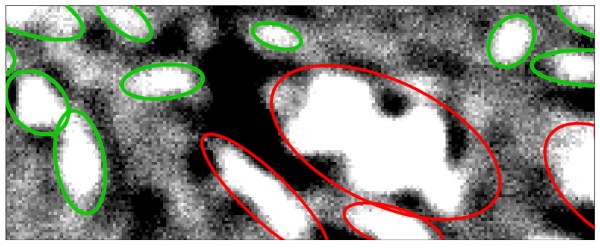
We recently had the great opportunity to collaborate with Darius Koester to study the behaviour of myosin II bundles and actin filaments. Our side of the work was spearheaded by Lewis Mosby, who adapted a Python library originally used to feature galaxies to recognise the myosin bundles, and analysed in great detail their motile behaviour. Part of this work is published in The Biophysical Journal (preprint here). The detailed description of the myosin tracking can be found in a Special Issue of The Journal of Physics D, from the IOP (preprint here).
Confinement “diversifies” micro-swimmers

From soil bacteria to sperm swimming in the fallopian tubes, microorganisms are often found to swim within confined environments. What is the effect of confinement on their flow fields? In a new paper, recently published in Physical Review Letters, we combine experiment and modelling to show that -contrary to expectations- the variety of microbial flow fields is greatly increased under confinement. This can in turn have have qualitative effects on both the biology (e.g., feeding currents) and the physics (e.g., collective behaviour) of microorganisms in confinement. This work was done in collaboration with Raphael Jeanneret and Mitya Pushkin.
Article in SPIE
We recently helped some background bits and bobs for a perspective article in SPIE on the use of light to steer microrobots and microorganisms. You can read the full article here.
 Polin Lab