Our brief introduction to Chlamydomonas reinhardtii -aimed at physicists- is published in by the European Physical Journal as part of a Special Topics Issue on Microswimmers.
Author: mpolin
WISB small grant
Great news! In collaboration with John McCarthy (Warwick SLS) we got a small grant from Warwick Integrative Synthetic Biology Centre to support Ollie Sinfield for a few months after his PhD. Ollie will be working with us to develop a microfluidic channel to trap multiple generation of budding yeast cells for long-timescale microscopy. This will enable the study of inheritance of ageing dynamics.
Further funding for Richard!
Congratulations to Richard for winning a travel grant from the Research Conference Fund of the Institute of Physics! This grant will allow him to present his latest research results at the 4th International Soft Matter Conference in Grenoble this September. Well done Richard!
Colloidal Entrainment
 Particle entrainment by Raphaël, just accepted on Nat Com!
What happens to passive microparticles within a suspension of microorganisms? If the particles are small, they can be entrained over large distances by the micro swimmers. These interactions are rare, but their magnitude is large and -as it turns out- they end up dominating particle dynamics, which now resembles a jump-diffusion process. This is presented and discussed in details in a new work led by Raphaël, just accepted on Nature Communications. A preprint of the article (well.. a previous version) is currently available on the Arxiv.
Update. The article is now available here.
Richard nails funding
It’s nice to start the week with good news: Richard has obtained a C R Barber Trust fund to attend the Principles of Biological and Robotic Navigation conference this August in Dresden. Good stuff Richard!
George’s summer school
Great news today! George Parry, MSc-R Physics student co-supervised with Meera, has been accepted at the 2016 IFOM summer school in Quantitative Biology! This will be an excellent opportunity for this young physicist to get some hands-on training on cell biology!
AMR Pump Priming
Great news today! Two applications we submitted for pump priming funds to Warwick’s INTEGRATE AMR have been accepted! One is in collaboration with Meera Unnikrishnan (we’re very lucky to have George Parry working with us on this), and the other with Munehiro Asally, Yin Chen, and Vasily Kantsler. Each award brings £25k worth of equipment and consumables.
Visiting IMEDEA
Good news today! My application for a Visiting Fellowship to the Mediterranean Institute od Advanced Studies (IMEDEA) has been approved by the University of the Balearic Islands! I will be working with my good friend Idan Tuval from mid July to the beginning of September. We’ll work on experiments and modelling related to a parasite of dinoflagellates. Really looking forward to it!
Richard in Cargèse
Richard has just received the great news that he’s been selected to participate in the 2016 summer school in Cargèse on Active Complex Matter. Well done Richard!
Physics Viewpoint!
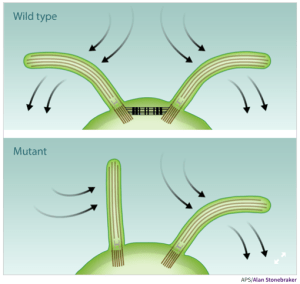
Together with Idan Tuval, I have been recently working on a Viewpoint for Physics, about an interesting recent PRL publication by Greta Quaranta, Marie-Eve Aubin Tam and Daniel Tam, from the University of Delft. They proved that flagellar synchronisation in Chlamydomonas depends on the presence of striated fibres joining the basal bodies of the two flagella. Apparenly, synchronisation of flagella from different cells or from the same cell can be based on completely different mechanisms! This is a really nice work, which opens a lot of new questions…
 Polin Lab